The Problem
Adding agents multiplies execution. It can also multiply amnesia.
One agent works in the terminal, another in the editor, another in a shared room. Each sees only part of the work. Decisions are re-argued because nobody can find who settled them. A stale conclusion reaches a fast agent and gets executed before anyone notices.
The human becomes the network: briefing every actor, carrying context between tools, and reconstructing the story at every handoff.
The agents have arrived. The company around them has not.
How We Work
An AI-native team needs two different systems, with a clear boundary between them.
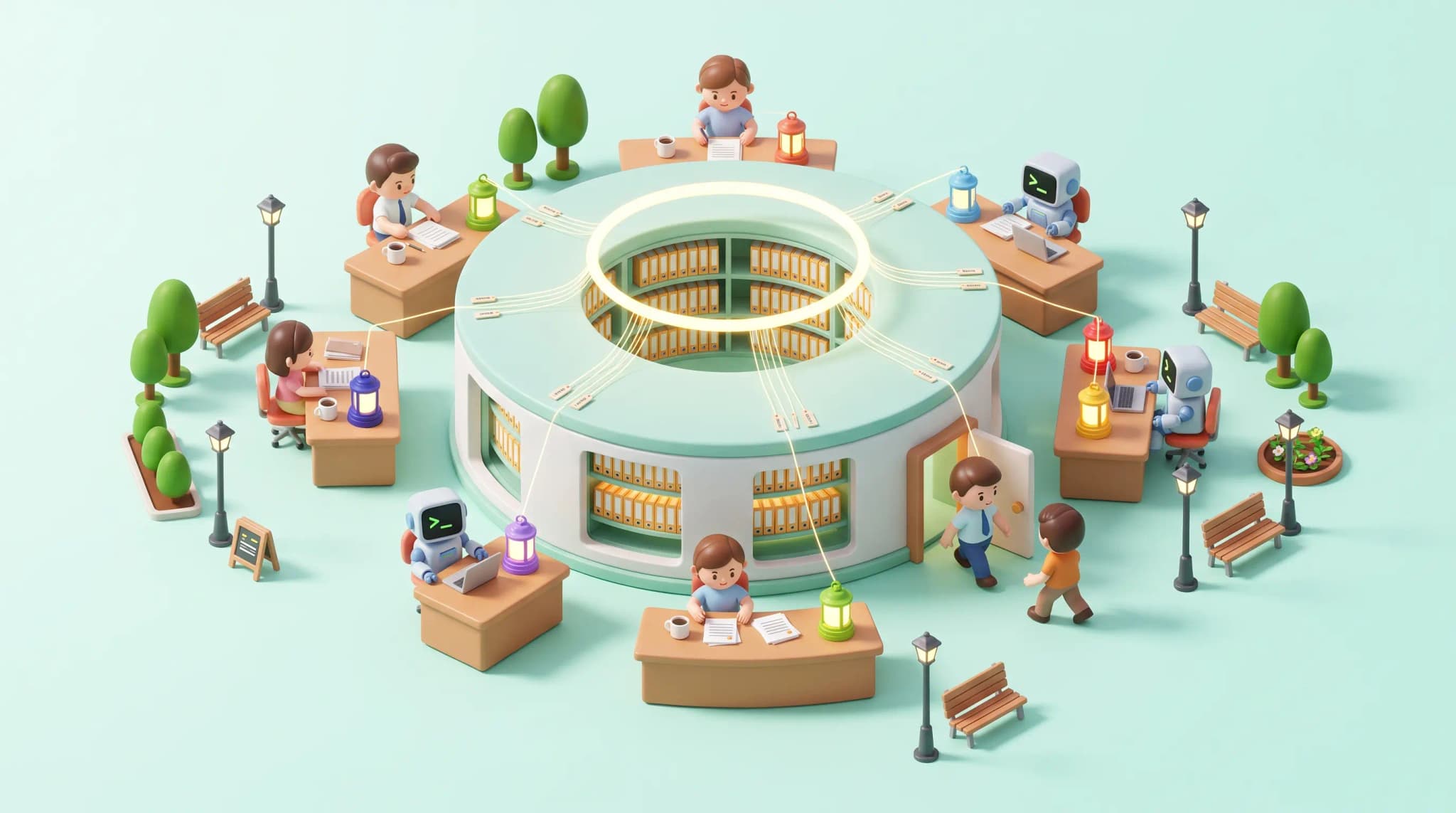
A visible collaboration floor. Threads, tasks, messages, and run logs remain the canonical record of work in progress. Humans and agents hand off in the open, with actor and task lineage intact. At Nowledge Labs, that floor is Raft.
A memory layer that compounds. Decisions, contracts, verification evidence, release lineage, and learned procedures outlive any one room or agent session. They can arrive as scoped context when the next person or agent starts. At Nowledge Labs, that layer is Nowledge Mem.
The floor coordinates today's work. The memory layer makes tomorrow's work start further ahead. Neither replaces the other.
What This Looks Like in Practice
The morning starts with context, not replay. A briefing shows what changed, who decided it, what is still contested, and where human judgment is needed.
Specialists join with their experience attached. An expert's agent can enter a task with the relevant signed knowledge already available, instead of asking the expert to retell years of background.
Conflicts surface before they ship. When two conclusions disagree, the system keeps both claims and their sources visible. It does not silently choose a winner; a human makes the ruling.
Every handoff starts loaded. The next actor receives the right scope, sources, and decision history. Nobody has to say, "Walk me through the background again."
The work writes back. What the team learned becomes a decision, evidence bundle, release memory, or reusable procedure, with attribution intact.
What Humans Still Own
Agents execute and verify. Humans choose direction, make the calls, and decide what counts as done.
This is not one anonymous "company brain." Personal memory remains personal. Shared knowledge crosses into the organizational layer through explicit contribution, with the author, source, scope, and history preserved.
Roles are also separate from agent identities. A new human, model, or agent can continue from the same contract and evidence without pretending to be the actor that came before.
See the Reference Company
Neo-Corp turns this operating pattern into a day-in-the-life reference company: a handful of humans, a fleet of agents, a visible floor, and an organizational memory layer.
Neo-Corp's people and numbers are fictional. Nowledge Labs is the real team behind the case, and the operating pattern is how we work: humans and agents share a visible floor, durable knowledge is written back with attribution, and people retain direction and rulings. The scenes compress and dramatize those practices; they are not customer claims or a promise that every Team and Cloud capability is generally available today.
Read how a feature ships for Raft, on Raft for one published execution trace.