
スキル
Nowledge Memがあなたの仕事の進め方を、AIが従える手順へと変える仕組み、そしてそれが信頼を得るまでの流れを説明します。
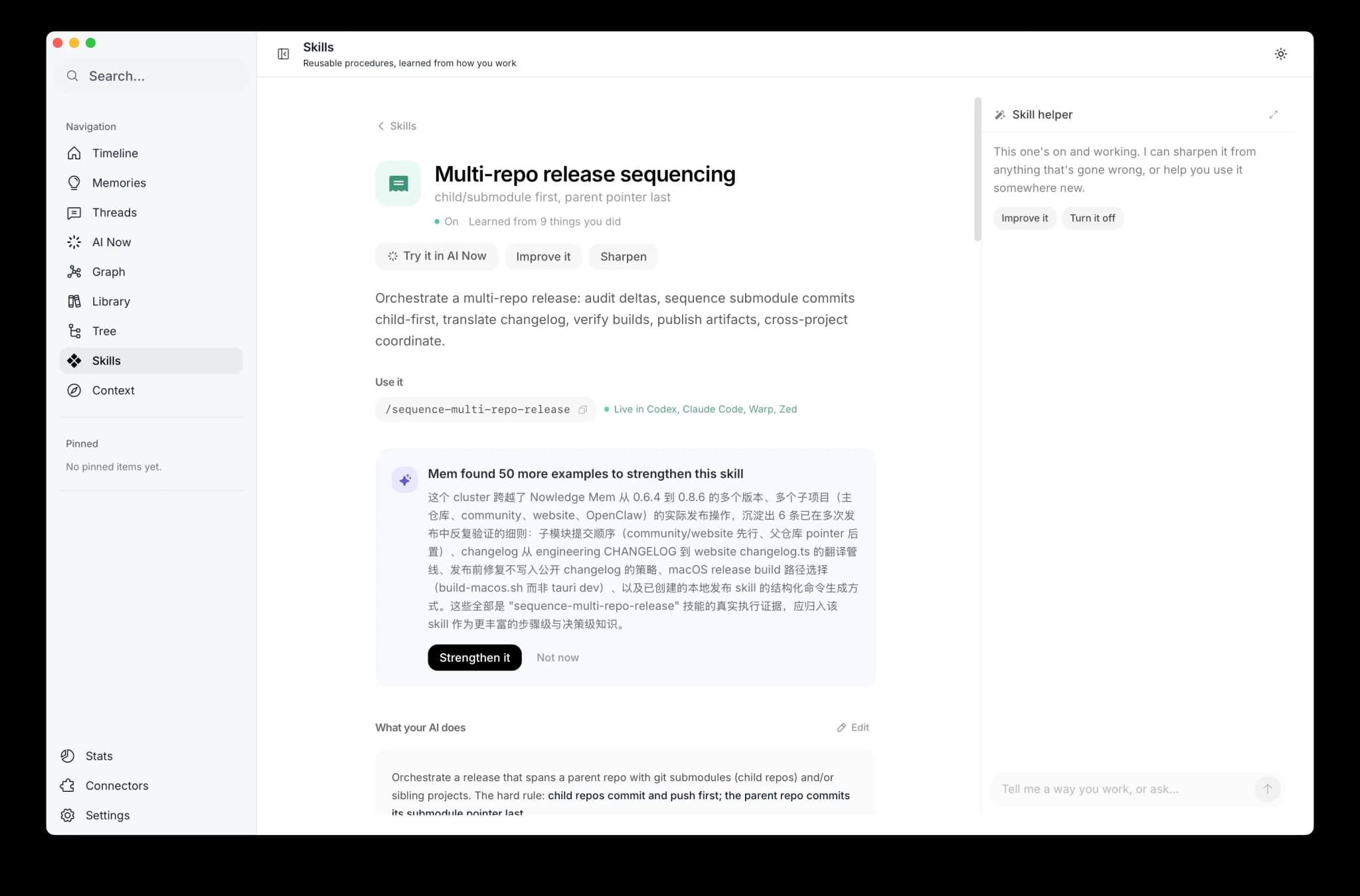
リリースを切る正しい順序を、あなたは知っています。 まずサブモジュールをコミットし、次に親のポインタを動かす。 一度失敗して学び、それ以降はただそうするだけ。 それは頭の中にあり、どのドキュメントにも書かれていません。
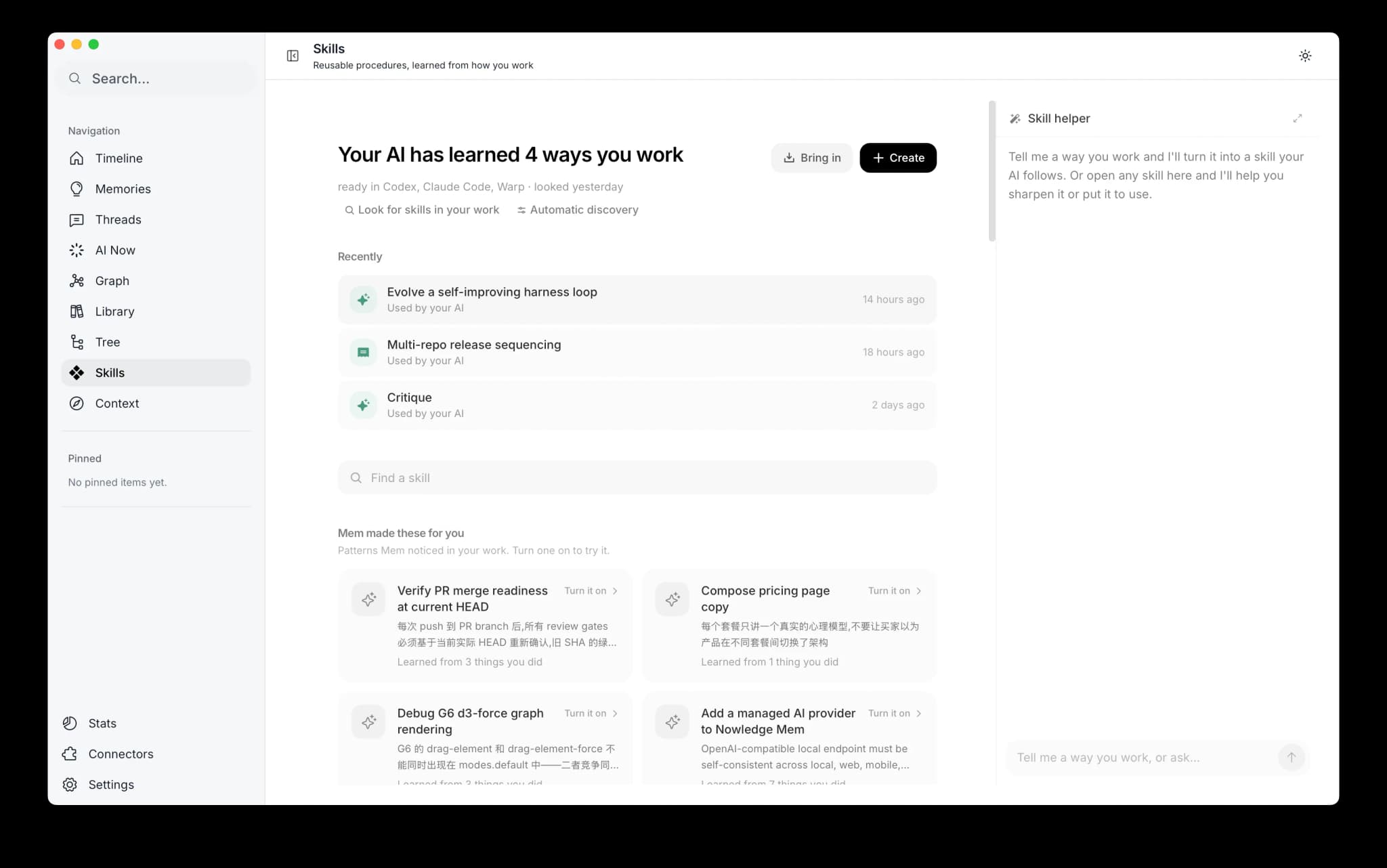
スキルとは、Memがその仕事の進め方を捉え、後でAIが従える手順として手渡すときに生まれるものです。
スキルとは何か
スキルとは、タスクを実行する再現可能な方法を、エージェントがあなたと同じようにできるよう書き留めたものです。 役に立つものは小さく具体的です。 操作の順序、安全確認、リリースの落とし穴、レビューの習慣、デバッグの一手。
それは保存されたプロンプトではなく、常設のルールでもありません。 常設のルール(「回答は短く」)はコンテキストにルールとして属します。 スキルとはタスクのどのようにであり、有能な代役があなたの経験なしには間違えてしまう手順です。
スキルは自動生成されるチェックリストでもありません。 優れたモデルは、もっともらしい手順をすでに書けます。 スキルの要点は、あなたの実際の仕事からしか生まれなかった部分、やってみるまで明らかにならない事柄を運ぶことにあります。 すべてのスキルは、それを生んだ仕事へとたどることができ、すべてのスキルはあなたがオンにするまでオフのままです。
スキルが生まれるまで
スキルが存在するようになる方法は三つあり、そのすべてが同じライフサイクルへと流れ込みます。
-
提案。 バックグラウンドインテリジェンスの一部として、Memはあなたのメモリやスレッドの中に繰り返される仕事の進め方を探します。 同じ手順が別々の機会に現れると、根拠としてその時々の出典を添えてスキルを提案します。 これが、
procedureとして分類されたメモリが重要な理由です。 型付けされた手順こそ、提案パスが最初に読むものだからです。 メモリがどのように型を得るかは知識の進化を参照してください。 -
ゼロから。 望む内容を記述することで、スキルを直接執筆できます。 Memは一つの質問をし、手順の下書きを作り、レビューのためにあなたに見せ返します。 自分のスレッド、ソース、ノートを素材として持ち込むこともできます。
-
インポート。 エージェントホスト用のスキルファイル(
SKILL.mdとそのバンドル)をすでに保管しているなら、それらを登録できます。 本文はそのまま保持され、その後は他のすべてと同じく、下書き、検証、改善のループへと流れ込みます。
どのように始まっても、スキルは小さなバンドルへとコンパイルされます。
手順そのものをSKILL.mdとして、加えて任意のスクリプト、参照、評価ケースを含みます。
単に保存されるのではなくコンパイルされるため、スキルがどこから来たかに関わらず、AIが読むバージョンは一貫しています。
信頼バッジが示すもの
スキルをオンにすると、エージェントはそれを実際に従うため、オンにする前に、それが本当に機能するかを知りたくなります。 すべてのスキルは信頼バッジを表示するので、どこまでテストされたかを一目で判断できます。
- 確認済み は、一つのテストに合格したことを意味します。 機能しますが、単一の例に基づきます。
- 実証済み は、二つ以上に合格したことを意味するので、さまざまな状況で頼ることができます。
Memはこれらのテストをあなたに代わって実行します。 スキルが生まれたのと同じ仕事から引かれた例を使うので、何かを設定する必要はありません。 スキルを開くと、バッジは「これはもう頼れるか?」への手早い答えになります。
AIがスキルをどう使うか
スキルは、あなたがすでに使っているエージェントが読めてこそ役に立ちます。
スキルをオンにすると、Memはそれを実際のファイルとして実体化し、接続された各ホストのネイティブな仕組みを通じて登録します。
たとえばClaude Codeなら~/.claude/skills、Codexやその他のエージェントならそれに相当する場所です。
形式は汎用のSKILL.md規約なので、一つのスキルがホストをまたいで機能します。
ツールによっては、スキルフォルダではなくライブ接続でMemに到達します。
そこではエージェントは、タスクがスキルを必要とするとき、ディスクから読み込むのではなくMemを通じてスキルを見つけます。
エージェントはその後、自分のスキルを読むのと同じようにスキルを読みます。 一つのエージェントが学べば、残りもそれを使えます。 ホストは単なるランタイムであり、スキルとその背後にある信頼はあなたのもとに残ります。
スキルをオフにすると、それは保持されますが実体化が止まります。 これは削除とは異なります。 どちらも元に戻せます。
スキルを研ぎ澄ます
Memにスキルを時間をかけて研ぎ澄ますよう頼めます。 そうすると、改訂を試み、スキル自身の根拠から引かれた例を使って、すでにあるバージョンと比較テストします。
新しいバージョンのテスト結果がより良い場合にのみ、変更を保持します。 手持ちのものを上回るものがなければ、何も保持せず、そう伝えます。 研ぎ澄ましはスキルを改善できますが、より悪いものを静かに差し替えることはないので、頼むのは常に安全です。
スキルとMemの他の要素との関係
スキルはMemが保持する他のものと並んで存在し、それぞれ異なる役割を持ちます。
- メモリ はあなたが知っていることです。スキル はあなたのAIができることです。
procedureとして型付けされたメモリは、スキルの最も一般的な原材料です。 - クリスタル は、複数のソースが収束したときに安定した参照知識を統合します。 スキルは精神においてより近く、これも生のままではなくコンパイルされますが、参照記事ではなく実行可能な手順を生み出します。
- コンテキストの ルール は、エージェントが一般にどう振る舞うかを形作ります。 スキルは、それが一つの特定のタスクをどう実行するかを形作ります。
目にするもの
スキルは スキル ビューにあります。 ホームには、アクティブなスキルと、あなたを待つ提案が表示され、各提案にはそれを促したあなた自身の仕事からの根拠が添えられています。 スキルを開くと、手順が主な内容として、その信頼状態、そしてどこから来たかが表示されます。 オン、オフ、削除は常にあなたの判断です。
次のステップ
- バックグラウンドインテリジェンスでは、スキル提案がいつ実行されるか、およびそれを統治する予算を扱います
- 知識の進化では、メモリが提案の最初に読む
procedure型をどう得るかを説明します - コンテキストは常設のルールが住む場所であり、スキルの隣に位置する振る舞いの層です
- Memに対してスクリプトを書くなら、スキルAPIリファレンスにRESTエンドポイントが一覧されています